

New Research shows seaweed on Florida shores costs billions in economic losses

Research shows seaweed on Florida shores costs billions in losses
A new study reveals the significant financial losses caused by stinky seaweed across Florida. It’s a billion-dollar impact and something experts want to see addressed.
Seaweed stuck on Florida's shores is causing a billion-dollar impact.
Now, a published study by researchers in Rhode Island, shows that seaweed is creating losses that ripple across tourism, fishing, restaurants, and local jobs.
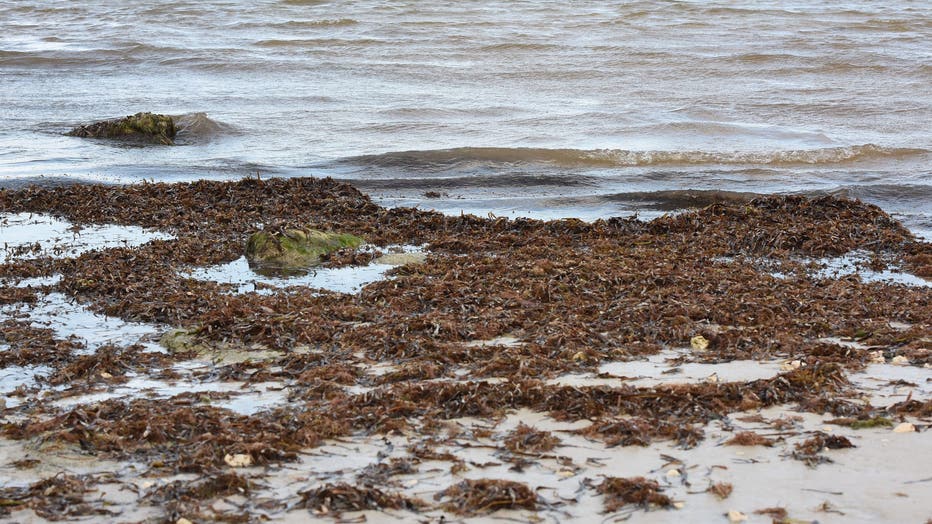
KEY WEST, FLORIDA, UNITED STATES - MAY 7: Seaweed that washed ashore is seen near the waterâs edge on May 7, 2023 in Key West, Florida. Scientists have reported that an usually large mass of Sargassum seaweed for this time of year has formed in the A
The backstory:
Last year, 38 million tons of seaweed came ashore across the globe, and that impact isn’t cheap. The thick brown seaweed – known by its scientific name, sargassum – isn't just deterring from the beauty of Florida's natural beaches as it piles up on the shores, it’s also expensive.
In 2018, the estimated cost to collect and transport to the landfill decomposing excessive Sargassum in Miami-Dade County was $35 million.
Brian Lapointe, a research professor at Florida Atlantic University and marine scientist, called sargassum a "real non-stopper for tourism."
Lapointe has conducted research into the relationship between water quality and the health of tropical seagrasses and coral reefs. While Lapointe didn’t write the new economic impact study, he's been researching the overall impacts of the seaweed for four decades.
Tourists don’t want to deal with the stinky seaweed and now a new study put a price tag on the cost, Laponte said.
"I think we all knew it was causing some economic harm maybe tens of millions, hundreds of millions, but to see the b word," said Lapointe.
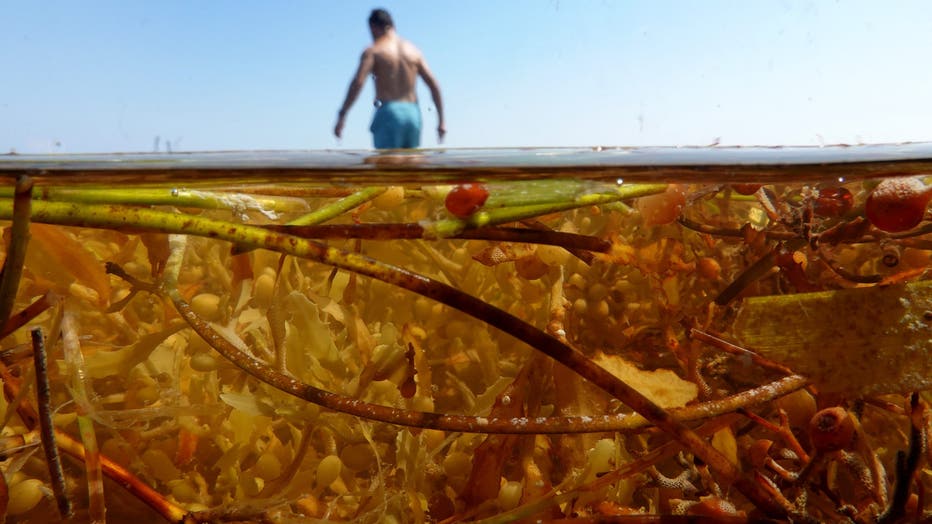
KEY WEST, FLORIDA - MAY 18: A beachgoer walks through sargassum that washed ashore on May 18, 2023 in Key West, Florida. Reports indicate that as summer progresses, a huge mass of sargassum seaweed which has formed in the Atlantic Ocean is possibly h
Why is seaweed expensive?
Seaweed is costing areas billions of dollars in losses every year when it comes ashore.
In the study, Marine Policy Center and Woods Hole Oceanographic Institution researchers from Rhode Island looked at Puerto Rico, the U.S Virgin Islands, and Florida’s Atlantic coast—using economic models that track how losses ripple across tourism, fishing, restaurants, and local jobs.
"In the billions of dollars annually in southeast Florida, that’s a big – that’s a big number," Lapointe said.
Here's three reasons why seaweed has become expensive for Florida beaches:
Seaweed's "rotten egg" smell deters tourists
Tourists don’t want to see it when they’re expecting pristine beaches on vacation.
"The tourists don’t like it, it stinks as it decomposes, that rotten egg smell," said Lapointe.
"The presence of sargassum in a beach segment reduces gross local product by 11.6 % with additional lagged effects in the following 12 months due to negative publicity ranging between a 5.9 % and a 9.9 % reduction in gross local product," the study said.
Impacting human health
The study said that sargassum releases toxic gases as it decomposes. This can impact the quality of life for the people who live and work near areas where sargassum has accumulated.
Harmful to local wildlife
Sargassum is a free-floating brown micoralgae that can create a harmful algal bloom. Increased nitrogen the seaweed gives off creates harmful algal that can cause catastrophic impacts on coastal ecosystems, research from Florida Atlantic University said.
Algal blooms can produce toxins that can kill fish, mammals and birds, and may cause human illness or even death in extreme cases, the National Oceanic and Atmospheric Administration said. Sargassum inundation events can also block light from seagrasses and corals, which they need for health, reproduction and survival, the U.S. Environmental Protection Agency said.
Other impacts include reducing seagrass meadows, leading to beach erosion and impacting turtle nesting, the study said.
When is seaweed season?
Sargassum usually runs from March to October every year, the city of Boca Raton reported.
The study confirmed that sargassum season is starting earlier and lasting longer.
Using real-world data, researchers looked at current sargassum forecasts and found they’re accurate.
What's next:
Lapointe keeps advocating for fewer regulations at the state and federal level when it comes to harvesting seaweed.
He said removing those could lessen the impacts on the environment and the state’s economic losses.
The Source: Information in this story was gathered from reporting from FOX 35's Esther Bower who read about the study and spoke with a researcher on Jan. 22.