

Florida gas prices stay near $4 as record diesel costs fuel inflation concerns
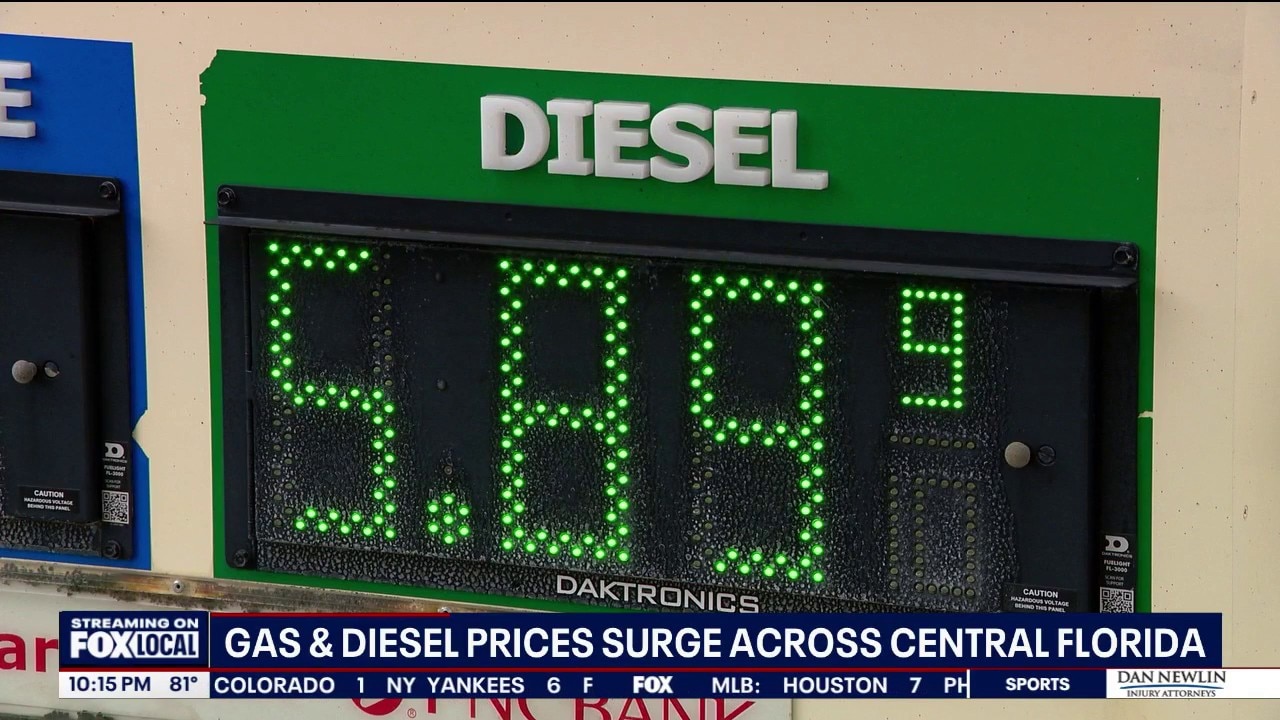
Florida experiences record diesel costs, fueling inflation concerns
Florida drivers are continuing to pay nearly $4 a gallon for gasoline, while diesel prices have climbed to levels not seen since the early stages of the conflict over the Strait of Hormuz, raising concerns that higher transportation costs could drive up prices on everyday goods.
ORLANDO, Fla. - Florida drivers are continuing to pay nearly $4 a gallon for gasoline, while diesel prices have climbed to levels not seen since the early stages of the conflict over the Strait of Hormuz, raising concerns that higher transportation costs could drive up prices on everyday goods.
Although gasoline prices typically decline after the busy summer travel season, analysts say global oil market volatility and geopolitical tensions are keeping fuel prices elevated.
What we know:
AAA reported Florida's average price for regular gasoline was $3.90 per gallon Tuesday, down 5 cents from the previous week but still hovering near the $4 mark for more than a month.
Across the state, average prices ranged from about $3.85 per gallon in Jackson, Pinellas and Lake counties to $4.18 per gallon in Monroe County, home to the Florida Keys.
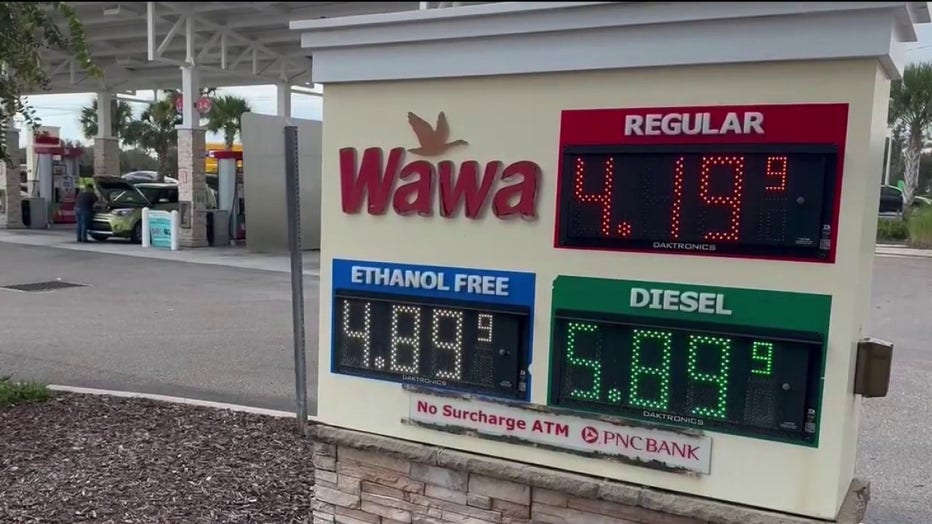
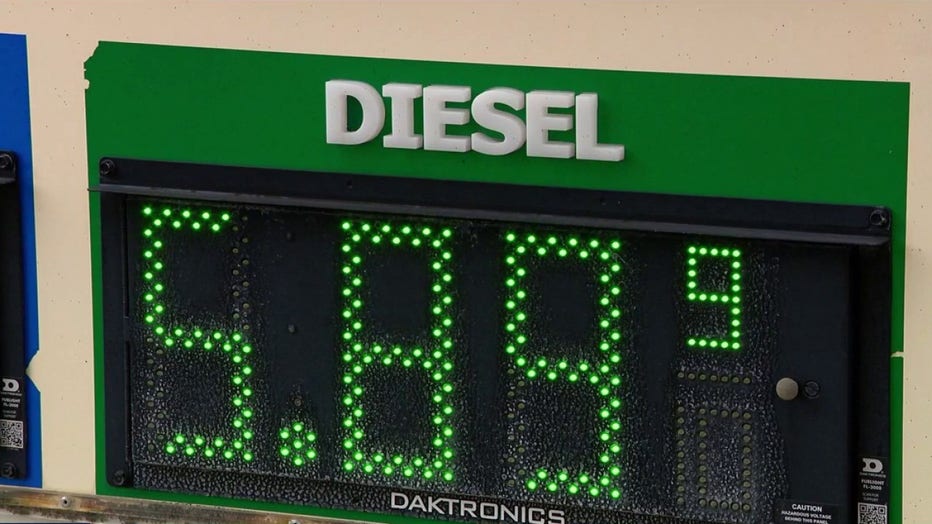
Nationally, regular gasoline averaged $4.15 per gallon, while diesel reached a record $5.90 per gallon Tuesday.
AAA spokesman Mark Jenkins said demand typically eases after Labor Day, but other factors continue to influence fuel prices.
"Typically speaking, when we move out of the summer travel season, there's less demand for gasoline through the fall months, and so that can help put some downward pressure on gas prices. But, of course, it's hurricane season. If a major storm impacts refineries along the Gulf of Mexico, then that could have more of an upward impact on gas prices."
Why diesel matters
While higher gasoline prices affect commuters, analysts say soaring diesel prices have broader economic consequences because diesel powers the trucks that move food, clothing and other consumer goods across the country.
Experts say higher transportation costs can eventually be passed along to consumers through higher prices on everyday products.
What's behind the increase?
Patrick De Haan, head of petroleum analysis at GasBuddy, said the normal seasonal decline in fuel prices has been disrupted by global events affecting energy markets.
"This is the time of year that most Americans see gas prices going down as demand falls, and we soon change to winter gasoline, but as of late, we've been seeing a lot more ups — especially for diesel — the fuel that drives the U.S. economy and that may continue."
Analysts point to geopolitical tensions and supply chain disruptions as key factors driving volatility in global oil markets.
The local impact
Local perspective:
Drivers across Central Florida said the latest jump has been noticeable at the pump.
In Sanford, $10 buys less than 2½ gallons of gasoline, and many motorists said they're adjusting household budgets to cope with the higher costs.
"It's not ideal. It's not great. But you've got to pay to play," driver Grant Walters said.
Another driver, Donald Peterson, said he never expected fuel prices to reach current levels.
"I'm turning 60 years old, and I never thought fuel was going to be this expensive."
AAA recommends motorists avoid stations immediately off major highways, where prices are often highest, and instead drive a few extra blocks into nearby neighborhoods to find lower-priced fuel.
What about electric vehicles?
For electric vehicle owners, charging costs have remained relatively stable. The average price at public charging stations in Florida was about 41 cents per kilowatt-hour Sunday, a rate that has changed little since early March.
The Source: This story was written based on information shared by AAA spokesman Mark Jenkins, Patrick De Haan, head of petroleum analysis at GasBuddy, and drivers around Central Florida.