

SpaceX launches Starlink mission as Trump pushes for 1,000 annual launches
Trump administration targets 1,000 rocket launches a year by 2030
The Trump administration is pushing for a dramatic increase in U.S. rocket launches over the next several years, setting a goal of reaching 1,000 launches annually by 2030 as part of a broader effort to expand the nation's space industry.
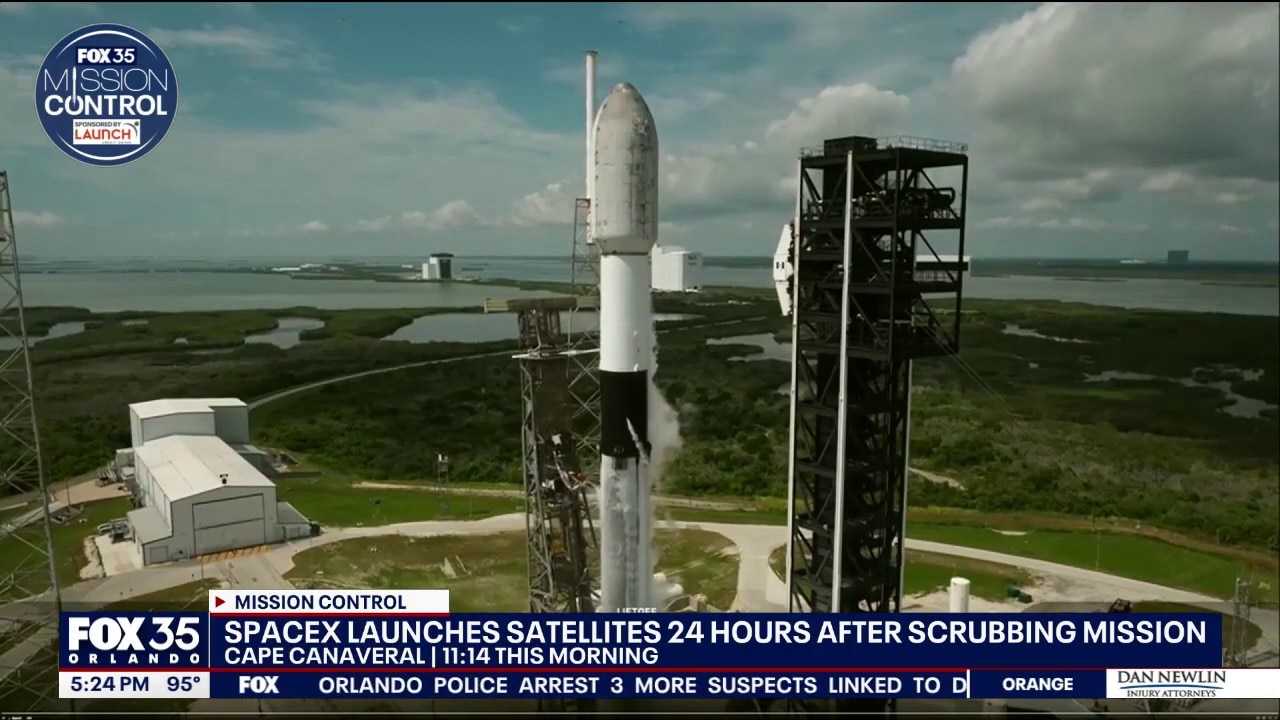
CAPE CANAVERAL, Fla. - SpaceX successfully launched another batch of Starlink satellites from Florida's Space Coast on Friday, a day after a last-second scrub, as the Trump administration pushes to dramatically increase the number of launches and reentries across the United States.
A Falcon 9 carrying 29 Starlink satellites lifted off from Space Launch Complex 40 at Cape Canaveral Space Force Station at 11:14 a.m.
Big picture view:
The launch came after SpaceX halted Thursday's countdown about 30 seconds before liftoff because of an undisclosed issue.
Friday's SpaceX mission marked the 30th flight for the Falcon 9 first-stage booster, which previously supported Crew-6, USSF-124, SES O3b mPOWER-B and 23 Starlink missions.
About 8½ minutes after liftoff, the booster successfully landed on SpaceX's "A Shortfall of Gravitas" droneship in the Atlantic Ocean.
Trump targets 1,000 launches and reentries a year
Dig deeper:
Friday's launch came as President Donald Trump unveiled a new National Space Transportation Policy aimed at accelerating the growth of the U.S. commercial space industry.
The policy calls for U.S. space transportation ranges to support more than 1,000 launches and reentries annually by 2030.
The presidential memorandum directs federal agencies to expand launch infrastructure, speed up permitting and environmental reviews.
What it could mean for the Space Coast
Local perspective:
Cape Canaveral Space Force Station and NASA's Kennedy Space Center are among the federal launch facilities expected to play a major role in accommodating the growing commercial space industry.
The policy directs NASA and the Pentagon to prioritize and coordinate infrastructure investments at federal launch and reentry ranges. It also calls for more efficient scheduling.
Reaching the administration's target would represent a dramatic expansion of launch activity and could require significant upgrades to launch pads, range systems and other infrastructure on the Space Coast.
SpaceX already driving launch growth
SpaceX has been responsible for much of the recent surge in U.S. launches, with its reusable Falcon 9 rockets routinely carrying Starlink satellites into orbit.
Starlink is SpaceX's satellite-based broadband network, using thousands of satellites in low-Earth orbit to provide high-speed, low-latency internet service around the world.
Friday's mission added another 29 satellites to that constellation.
Moon ambitions part of broader policy
What's next:
The White House's policy extends beyond commercial launches. Trump is also calling for U.S. astronauts to return to the moon by 2028 and for initial elements of a lunar base to be established by 2030.
The administration says expanding commercial space transportation is also important to U.S. national security and maintaining the country's position in the growing international competition in space.
The Source: This story was written based on information shared by SpaceX, the White House, NASA, and Zac Aubert, of The LaunchPad Network.