

Will Florida get more auroras this weekend?
ORLANDO, Fla. - Will Florida get more auroras this weekend? In short, maybe.
The sun remains quite active, and its solar material has reached the earth, interacting with our magnetic field that can cause auroras, as the upper-level nitrogen and oxygen molecules are excited by the energized particles from our nearest star.
What we know:
A solar flare earlier today reached, "X 4.05" levels, which is considered strong. Some coronal mass was observed being emitted too, which could lead to some activity if it reaches us.
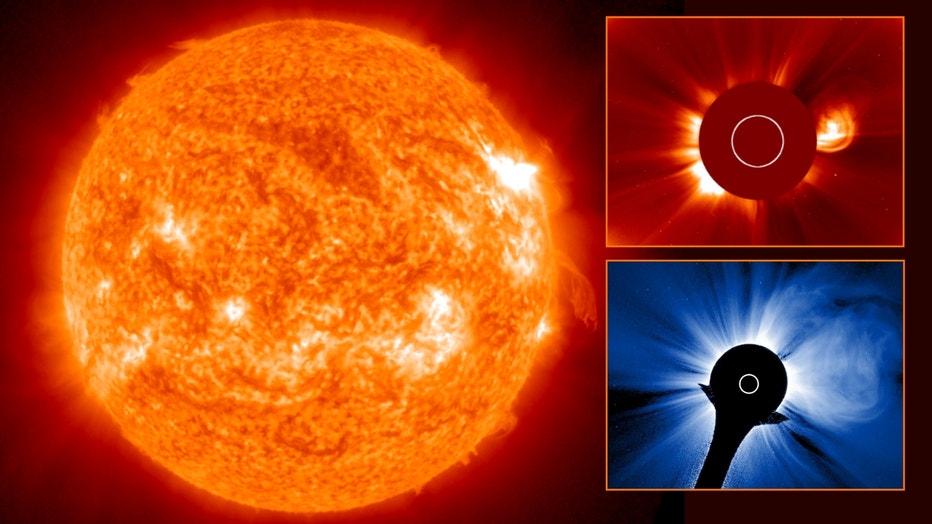
What exactly happened on the Sun?
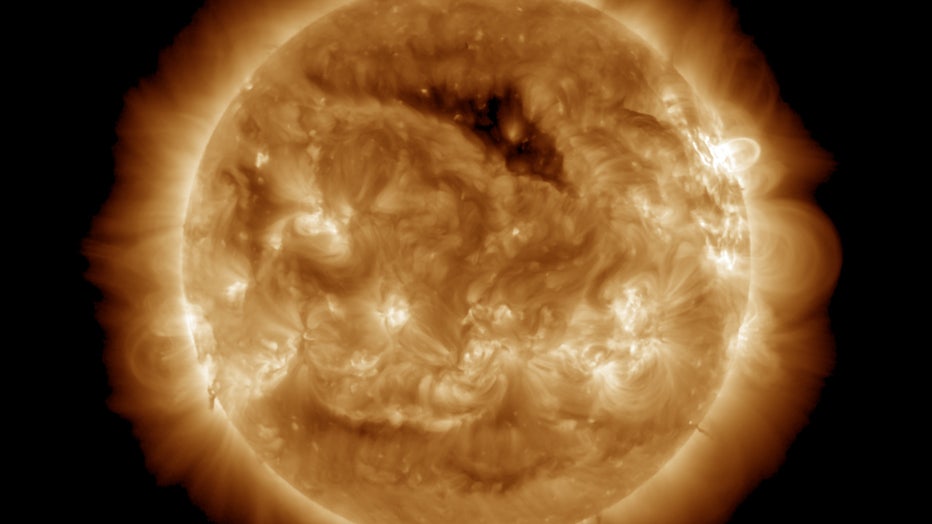
A region on the Sun called "Sunspot Region 4274" fired off a powerful X4.05 solar flare. X-class flares are the strongest category, and this one came with a blast of radiation detected as a "Type II radio burst" and a surge in solar particles. A flare this size can sometimes launch a big cloud of charged particles called a coronal mass ejection, or CME. That’s the part that affects Earth’s magnetic field and can trigger auroras. Right now, forecasters at NOAA are still analyzing the CME to see whether it’s aimed at Earth or mostly off to the side.
Could this cause auroras in North America?
What we don't know:
Yes, but probably not for Florida. The flare did increase solar radiation and has been kicking up Earth’s magnetic field.
Minor geomagnetic storms (G1–G2) are likely, which are enough to spark auroras in the northern tier of the United States. But for auroras to reach Florida, we’d need a strong G3/G4 storm with a direct, well-aimed CME and a south-leaning magnetic field when it arrives. So far, nothing in the forecast suggests that setup.
Is Florida unlikely to see anything?
Florida sits at a very low geomagnetic latitude. That means we’re far from the zone where Earth’s magnetic field normally guides solar particles into the atmosphere. Even during good geomagnetic storms, the auroral oval only dips into the Midwest or Mid-Atlantic. You need a much stronger storm to push it deep into the South. So unless the CME turns out to be stronger and more Earth-directed than expected, Florida stays under normal night skies.
What effects could we feel here?
Nothing dangerous. At most:
- Slight impacts to HF radio and GPS accuracy
- Minor flight-route adjustments for high-latitude aviation
- Better aurora chances for northern photographers
- For everyday life in Florida, it’s a non-event unless you’re trying to make long-distance radio contact on the high frequencies.
Could conditions change?
They could. If new data shows the CME is aimed at us, NOAA would update the forecast quickly. Stronger geomagnetic storms can appear when the magnetic field inside the solar wind turns south, even if the CME wasn’t huge. But right now, the setup favors minor storming, not a major event. Space weather is notoriously unpredictable because even if we, "think" it'll do one thing, "substorms" can form, where the magnetic lines fold upon themselves and focus energy in lower latitudes unexpectedly, like Florida.
Bottom line: Will Florida see the aurora this weekend?
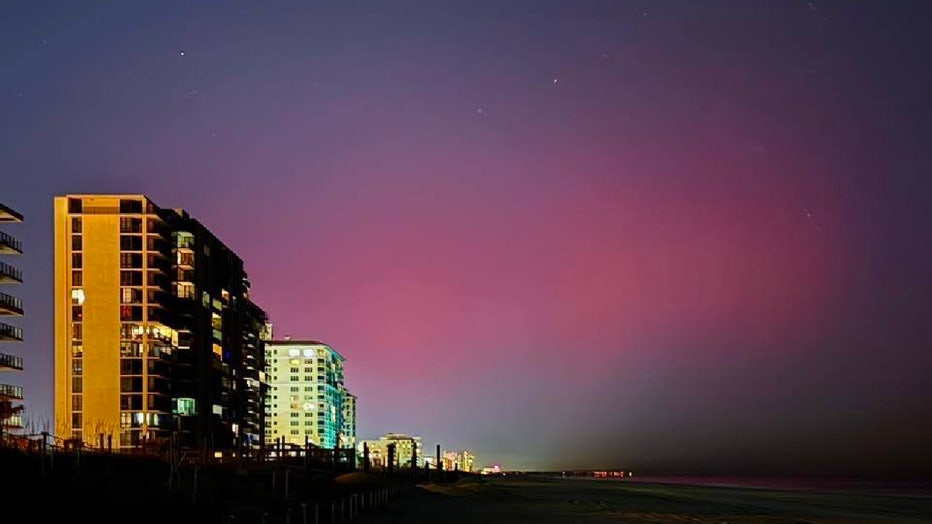
A photo of the aurora seen in the skies of Jacksonville Beach. Credit: Linda Johnson.
Not likely. The flare was impressive, but the magnetic and solar-wind setup isn’t pointing toward a deep-South aurora show. Northern states may get some color; Florida probably gets normal stars and maybe a few confused social-media posts. Lots of hype is online, but one thing is for sure: no one is completely sure!
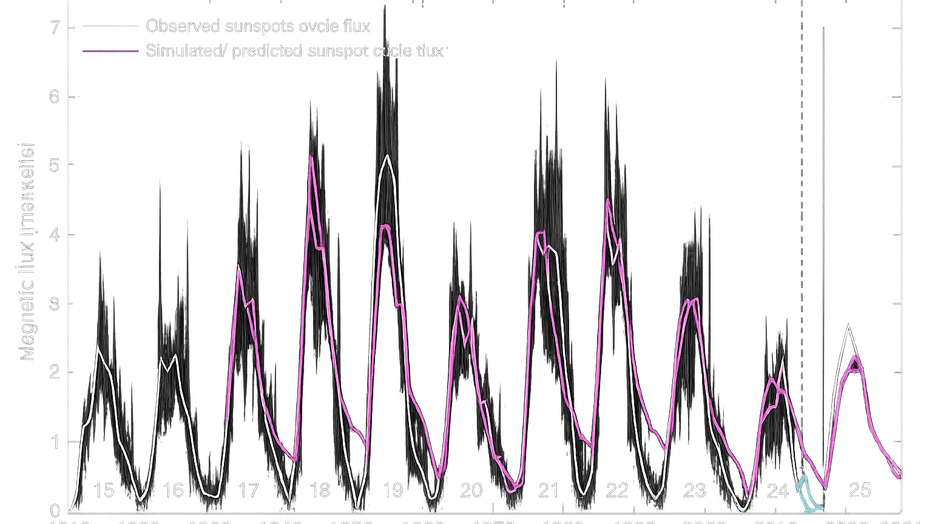
The solar cycle is the Sun’s natural rhythm. Every eleven years or so, the magnetic field flips and reorganizes itself. That flip fuels a rise and fall in sunspots, flares, and CME activity. When the cycle is climbing toward its maximum, the surface gets busy. Big sunspot groups appear, flares get stronger, and space weather becomes more noticeable here on Earth. Think of it like a tide. Right now the tide is near its fullest point, and the Sun is putting on its brightest magnetic show. As the years go by, it will ebb again toward a quiet minimum before the next round begins.
The Source: The information in this article was provide by the FOX 35 Storm Team.