

Artemis II splashdown: NASA astronauts back on Earth after historic moon flyby

Artemis II astronauts return to Earth after historic moon mission
NASA’s Artemis II astronauts safely returned to Earth after a historic mission around the moon, splashing down in the Pacific Ocean off the coast of San Diego, officials said. The crew traveled about 694,000 miles after launching April 1 from Kennedy Space Center, completing a 10-day journey that marked the first human lunar mission in more than 50 years.
After its historic 10-day flight to the moon, Artemis II astronauts splashed down off the coast of California on Friday night.
Here is everything you need to know about Artemis II's splashdown, the timeline, and what happens after the Orion spacecraft lands in the Pacific Ocean.
Crew aboard USS John P. Murtha
Just before 10 p.m. EDT, the Artemis II crew was safely aboard the USS John P. Murtha, where they will undergo post-mission medical evaluations in the ship’s medical bay before traveling back to shore to board a NASA aircraft bound for the agency’s Johnson Space Center in Houston.
NASA held a post-splashdown news conference at 10:35 p.m. EDT from the agency’s Johnson Space Center in Houston. Participants included:
- NASA Associate Administrator Amit Kshatriya
- Lori Glaze, acting associate administrator, Exploration Systems Development Mission Directorate
- Rick Henfling, entry flight director, Artemis II
- Howard Hu, manager, Orion Program
- Shawn Quinn, manager, Exploration Ground Systems Program
When was crew removed from capsule?
Approximately two hours after splashdown, the crew was one-by-one extracted from Orion and then flown to the USS John P. Murtha by U.S. Navy helicopters. Once aboard, the astronauts were expected to undergo post-mission medical evaluations before returning to shore to board an aircraft bound for NASA’s Johnson Space Center in Houston.
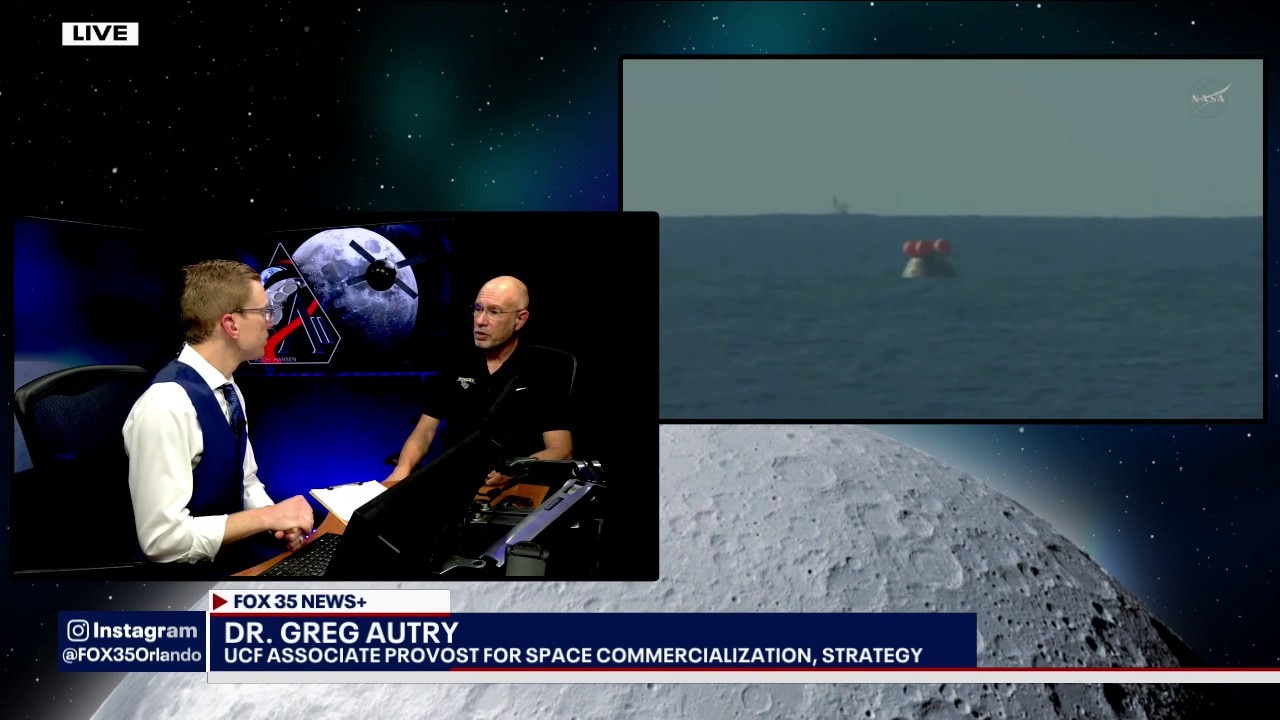
Artemis II splashes down: What's next in space exploration?
Dr. Greg Autry, associate professor for space commercialization, strategy at University of Central Florida (UCF) talks with FOX 35's Garrett Wymer, moments after Artemis II splashed down in the Pacific Ocean on Friday, April 10. Artemis II flew to the moon and back on its 10-day mission. The four astronauts aboard became the first humans to see the far side of the moon, and have now traveled farther into space than any other human in history.
President Trump praises astronauts
Their return to Earth was heralded by President Donald Trump, who congratulated the crew in a Truth Social post, writing, "The entire trip was spectacular, the landing was perfect and, as President of the United States, I could not be more proud!"
Splashdown: When did Artemis II return to Earth?
Artemis II splashed down in the Pacific Ocean, off the coast of Southern California, around 8:07 p.m. Eastern Time.
Watch live: Artemis II splashdown coverage
FOX 35 Orlando and FOX 35 News+ is streaming the Artemis II splashdown live in the video player above, on YouTube, on FOX 35's Facebook page, and TikTok.
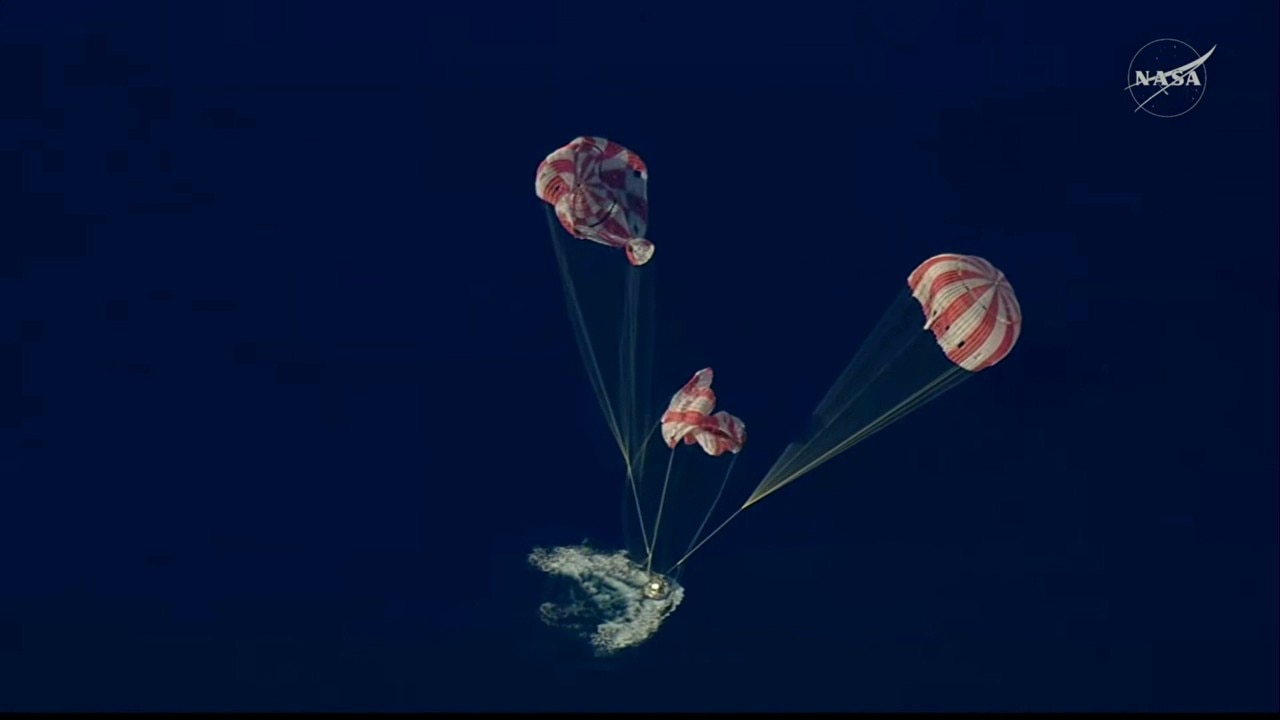
Artemis II lands in Pacific Ocean near California
Artemis II successfully splashed down off the coast of San Diego, California, after its historic 10-day mission to the moon and back.
FOX 35 News+ with Garrett Wymer has had coverage all day. NASA will begin its coverage at 6:30 p.m.
Artemis II splashdown: Minute-by-minute timeline
Here is NASA's minute-by-minute timeline of the Artemis II splashdown
- 7:33 p.m.: Orion’s crew module will separate from the service module, exposing its heat shield for the spacecraft’s return through Earth’s atmosphere, where it will encounter temperatures of about 3,000 degrees Fahrenheit.
- 7:37 p.m.: Following separation, Orion will perform an 18 second crew module raise burn beginning to set the proper entry angle and align the heat shield for atmospheric interface.
- 7:53 p.m.: When Orion reaches 400,000 feet above Earth’s surface while traveling nearly 35 times the speed of sound. The crew is expected to experience up to 3.9 Gs in the planned entry profile. This moment marks the spacecraft’s first contact with the upper atmosphere and the start of a planned six-minute communications blackout as plasma builds around the capsule.
- 8:03 p.m.: Around 22,000 feet in altitude, the drogue parachutes will deploy, slowing and stabilizing the capsule as Orion nears splashdown.
- 8:04 p.m.: At around 6,000 feet, the drogues will release, and the three main parachutes will deploy, reducing Orion’s speed to less than 136 mph.
- 8:07 p.m.: Slowing to 20 mph, Orion splashed down in the Pacific Ocean off the coast of San Diego, completing the Artemis II crew’s return to Earth and a 694,481-mile journey.
- From there, teams from NASA and the U.S. military will extract the crew from Orion and fly them via helicopter to the USS John P. Murtha.
- Within two hours after splashdown, the crew will be extracted from Orion and flown to the USS Murtha. Recovery teams will retrieve the crew, assist them onto an inflatable raft, and then use helicopters to deliver them to the ship. Once aboard, the astronauts will undergo post‑mission medical evaluations before returning to shore where awaiting aircraft will take them to NASA’s Johnson Space Center in Houston.
What happens after splashdown?
After Artemis II splashes down in the Pacific Ocean, NASA and the U.S. military will recover the astronauts from the Orion spacecraft. They will then be flown to the USS John P. Murtha to undergo a medical evaluation.
From there, the Artemis II crew will be flown to NASA's Johnson Space Center in Houston, Texas.
Watch NASA explain Artemis II splashdown, from entry to landing
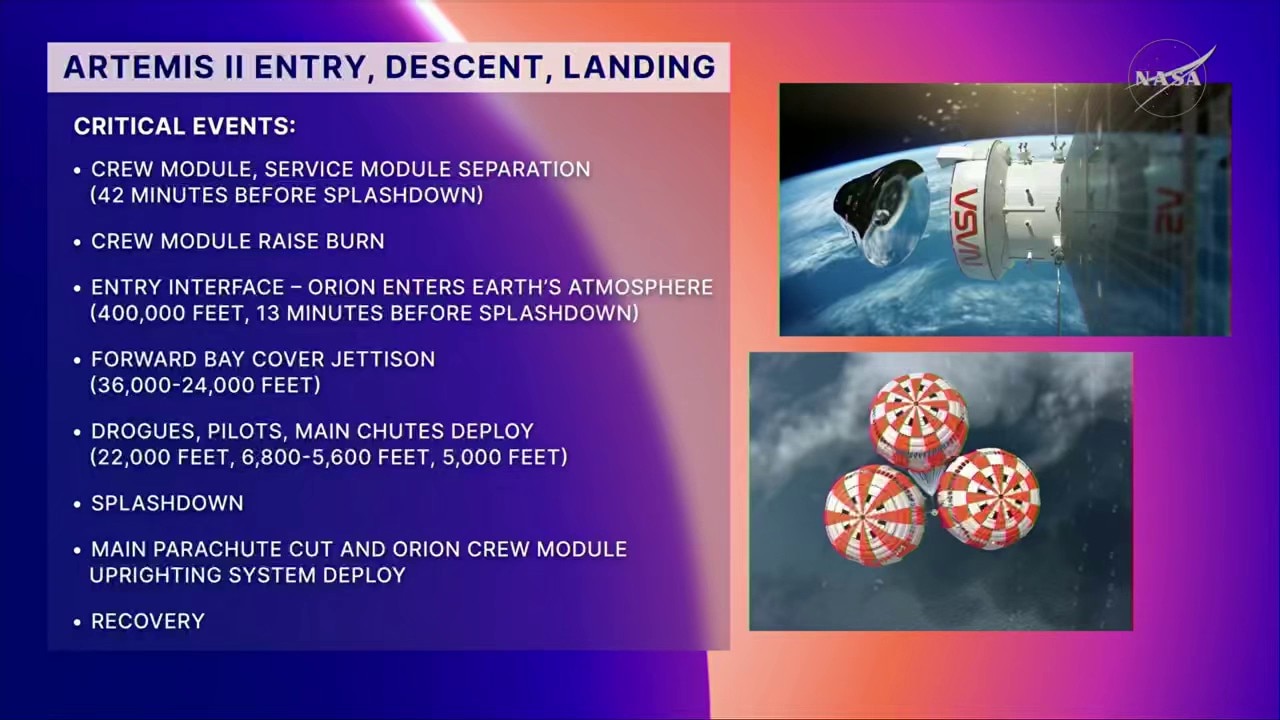
Artemis II splashdown: Where will crew land, how does that happen?
During a press briefing on April 8, NASA discussed the splashdown of the Artemis II. The crew is expected to splashdown in the Pacific Ocean, off the coast of Southern California, on Friday night, April 10. NASA explains how the Orion spacecraft will re-enter Earth's atmosphere and a step-by-step guide of what happens during splashdown.
The Source: This article was written with information from NASA, the Artemis Real-time Orbit Website (AROW), and live feeds from NASA's YouTube channel.