

Florida hurricane season: Every item you need in your emergency kit
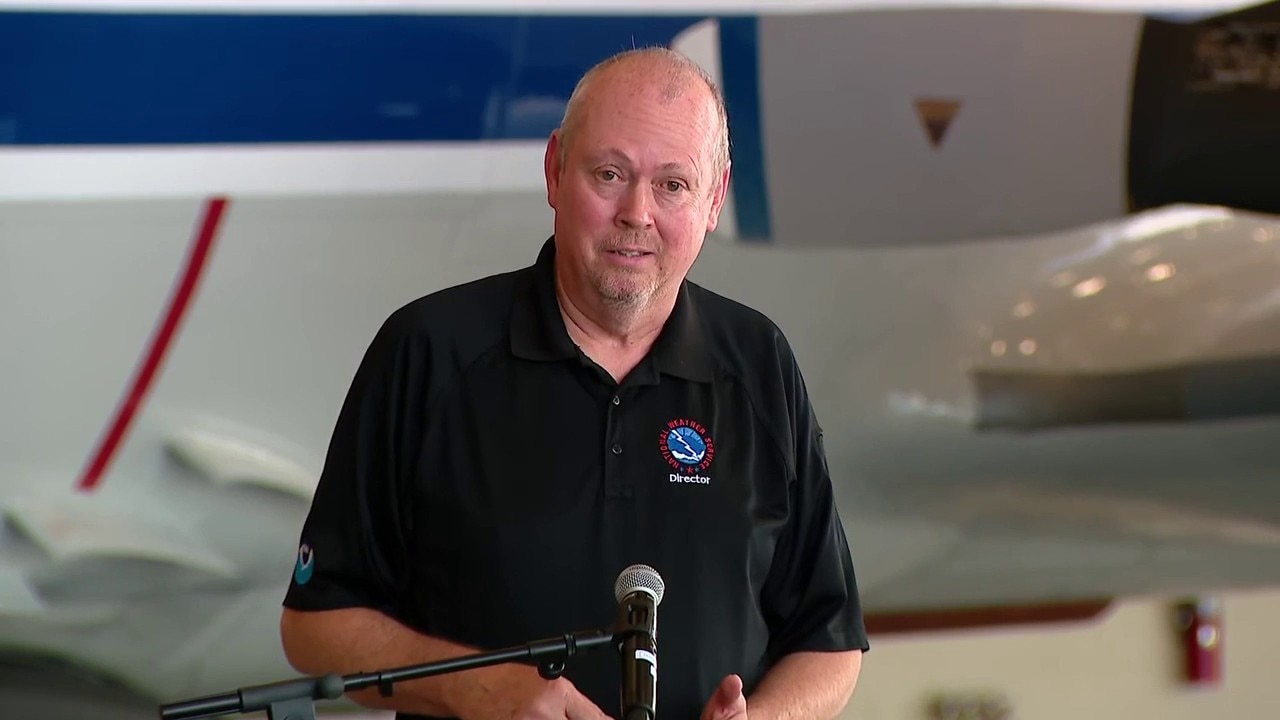
NOAA expert on hurricane season: prepare now, pay attention to storm impacts, threats
The National Oceanic and Atmospheric Administration (NOAA) released its tropical forecast for the 2026 Atlantic hurricane season, predicting a below-normal season, citing a strong El Niño weather pattern, warmer ocean temperatures, and weaker trade winds. NOAA predicts 8-14 named storms, 3-6 hurricanes, and 1-3 major hurricanes (Category 3 or higher). The Atlantic hurricane season runs June 1 - November 30, 2026. NOAA's National Weather Service Director Ken Graham talked about the importance of preparing for hurricane season early, as well as paying attention to every system and every storm. He encouraged the public to focus on every system and every storm and the impacts, like flooding and storm surge and tornadoes -- more than the storm name and category.
ORLANDO, Fla. - Do you have your emergency kit ready for hurricane season?
Emergency officials recommend preparing for hurricane season before the season starts, including tackling house projects and cleaning up the yard, building an emergency kit should you need to evacuate, ride out the storm, or have no power for several days.
The 2026 Atlantic hurricane season starts on June 1 and ends on November 30. Here's everything you should have in your emergency disaster kit:
What to have in your emergency disaster kit
- Two-week minimum supply of medication, regularly used medical supplies, and a list of allergies
- Non-perishable food items, drinks, snacks, and baby food to last at least 7 days; 1 gallon of water per person per day
- Flashlights, batteries, NOAA Weather Radio
- Cell phone chargers and charger banks
- Cash
- Important documents: Insurance cards, medical records, bank information, credit card numbers, copies of birth/marriage certificates
- First Aid Kit
- Extra clothing, including rain gear (jackets, hats, boots, umbrellas), work boots and gloves
- Specialty items for infants, children, older people or family members with disabilities
- Pet items: Food and water for at least 7 days, proper ID/service animal I.D., ownership and vaccination records, carrier or cage, muzzle or leash, medications, and other supplies
Florida Disaster Supply Kit Checklist
Here is a downloadable emergency supply checklist from the Florida Department of Emergency Management.
What they're saying:
"Early preparedness is absolutely everything, period, end of story. The actions that you take today really get you ready for the hurricane season," said NOAA's National Weather Service Director Ken Graham.
"Looking back in time at our records, every Category 5 that's made landfall in this country was a tropical storm or less three days out. So they rapidly intensify, they get here quick. So everybody, you know, you think you might have a week on your timeline; the reality is you may only have days. That's why that preparedness early is absolutely everything, and I will repeat that."
Expert: Don't forget about the impacts of every tropical storm or hurricane
Graham cautioned that despite forecasts calling for a "below normal" or "below average" season, that it only takes one tropical storm or hurricane to wreak havoc on a community. He pleaded with people to pay attention to a system's strength, intensity, and path, not necessarily the name or category rank, as all those systems, no matter where they land, can bring damaging impacts, like heavy rain, flooding, wind damage, tornadoes, or storm surge.
"There will never be a hurricane 'just a', we'll never make that a name. There's no such thing as "just a" Cat. 1, "just a" tropical storm, "just a" Cat. 2. That is absolutely not the case. It doesn't matter what it is, you gotta look at the size, the forward motion, little wiggles matter on the impacts. Even the smallest storm, if it's slow enough and big enough, is going to create catastrophic flooding and storm surge. There's no such thing as "Hurricane Just a:. We've got to make sure the public pays attention to every single one of these systems and the actual impacts, not the category, not the name, but the actual impact associated with that storm. And that includes the tornadoes, heavy rain, damaging winds, even the high surf and rip currents as well, including the storm surge."
2026 tropical storm names
There are 21 storm names issued ahead of every hurricane season – and they rotate every six years. That means the 2026 hurricane names will again be used in 2032, according to the National Hurricane Center.
The names are used to help track multiple storms being monitored during the season, especially if two or more storms develop at the same time, as well as to help keep clear communication between government agencies, meteorologists and forecasters, and the public about a specific storm.
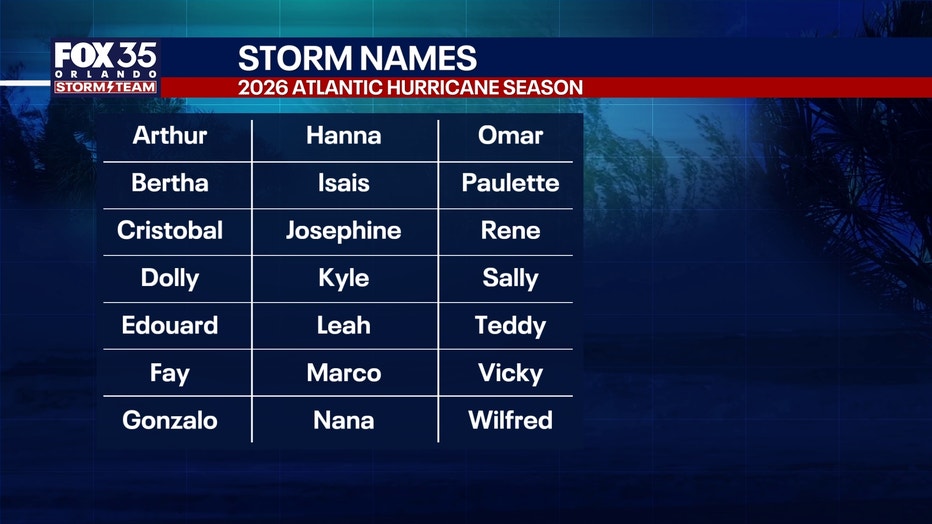
Here are this year's storm names:
- Arthur
- Bertha
- Cristobal
- Dolly
- Edouard
- Fay
- Gonzalo
- Hanna
- Isaias
- Josephine
- Kyle
- Leah
- Marco
- Nana
- Omar
- Paulette
- Rene
- Sally
- Teddy
- Vicky
- Wilfred
If all 21 names are used in a season, there is a reserve list with an additional 21 names.
Who picks the hurricane storm names?
The hurricane storm names are decided by an international body of forecasters and the World Meteorological Organization. They are used to help meteorologists, forecasters, journalists, and the public communicate warnings and updates about a specific storm.
"Assigning names to tropical cyclones makes tracking and discussing specific storms more straightforward, especially when multiple storms are active simultaneously. Naming also helps to avoid confusion among meteorologists, media, emergency management agencies and the public," the WMO said on its website.
There are four factors considered when coming up with the names:
- Short in character length for ease of use in communication
- Easy to pronounce
- Appropriate significance in different languages
- Uniqueness – same names cannot be used in other regions.
The Source: NOAA released its tropical outlook for the 2026 hurricane season Thursday, May 21, 2026, from its facilities in Lakeland, Florida. NWS Director Ken Graham and others talked about the forecast and the importance of preparedness ahead of the season. Additional information from the National Weather Service and National Hurricane Center.